

RISE Apparel
An imaginative voyage of digital product development, crafting and redesigning an application through Design Thinking :)
Project Overview
Rise Apparel is an international, modern fashion retail company which aims to achieve its expansion plan targeting an apparel market in Thailand. Regarding its sustainable branding, the company sees the importance to redesign the platform to encourage people to embrace sustainable fashion trends in Thailand, combining with technological innovations to enhance more seamless and joyful digital shopping experience.
The brand also values building relevance, individuality, and customer identity to increase customer engagement and loyalty that modern shoppers are guaranteed to find “the right match”, ensuring that customers can effortlessly find the fashion items that are most suitable for them in a short period of time. The company believes they will achieve the target which will contribute to significantly expected growth in 2026.
Product
Rise Apparel: Global Fashion App
Role
Product Manager
Product Owner
UX/UI Designer
Duration
2 months
Business Objectives
-
Reaches a Thai fashion market with a target group of 17-35 who has medium-high income level.
-
Creates a seamless shopping experience that users can find, choose, and buy the products in a short period of time.
-
Enhances the act of customer purchase, engagement, and loyalty to increase business profits and values.
-
Users are introduced to ‘fashion and sustainability’ with in-depth understanding which develops to constant sustainable practice.
-
Users are able to find the products they expect to buy with accurate size effortlessly and conveniently.
Brand History
-
Rise Apparel used to have only 1 offline store in Thailand, located in a frontrunner department store in central Bangkok. The store closed down 3 years later after its opening. The brand has no digital platforms for users to buy products, and has only one-sized clothes which are not accessible to everyone. The previous target group of the brand was 90% women with an age range of 15-28 who has upper-high income level.

Design Process
Discover
Brainstorm & Research
User Pain Points
Affinity Map
Competitor Analysis
Essential Insights
User Interview
Define
Empathy Map
User Personas
User Journey Mapping
Problem Statement
Ideate
Hypothesis & Solutions
Digital User Flows
Design
Wireframe
Mid-fi Screens
Hi-fi Screens
Prototype
Test
Usability Test
Feedback
Discover.
This stage covers the discovery of user concerns, problems, frustrations regarding using online fashion retail applications. The information gathered is grouped and prioritised by using an affinity map in order to identify major user concerns for user journey development. The major concerns include 1) Search and Filter System and 2) Size Guide Measurement. To gain more in-depth information regarding the prioritising problems, I have decided to do qualitative research by doing 5 user interviews to understand the gain and pain of shopping experience.
User Pain Points

Difficult to
search products
Users find it difficult to search products they are looking for due to a busy landing page which includes a lot of banners or menus.

Size guide on online fashion shopping is usually inaccurate and unreliable
Users feel indecisive to buy apparels online without trying on at stores, and cannot picture themselves wearing the product despite referring to the product pictures that models are wearing and representing.

Always see
unrelated products
Users usually end up seeing unrelated products. Similarly, they need to search multiple times to find their desirable products.

No recognition search or
user-friendly filter systems
Users cannot find products in a short period of time and have to recall exact names of the products which is difficult, inaccurate, and time-consuming, which can discourage the action of search and purchase. Some filters; for instance; styles of clothes (e.g. henley collar, johnny collar, joggers, sweatpants); age (e.g. 8-10 months, 15-17 years, teenagers); and size (XS/S, L/P, XL) are difficult to recognise and overlapping.

International size guide is unfamiliar
Users are not familiar with the international size guide when using foreign fashion retail platforms. Some size guide details contain excessive information to read which influence users to give up selecting or buying products easily
Affinity Map #1: Problems, Frustrations, and Concerns


Affinity Map #2: Prioritising Problems, Frustrations, and Concerns (sorted by features)


Competitor Analysis
Area of Focus
-
International fashion retail competitors
-
Search system, filter system, and results
-
Size guide, size information, and size format
-
Product demonstration (e.g. product shelf, variations, description, pictures, recommendations)
-
Product browsing


Target Group
Women aged 18-40 throughout Southeast Asia

Unique Selling Point
-
Popular among university students & first/second jobbers
-
Multi-brand platforms
-
Frequent hard sel
-
Focus on Asian size standards

Interesting Features
-
Variety of product view modes
-
Clear product colour variations
-
Clear category menus
-
Offers product ‘concept/occasion/filters
-
Users are able to checkout as guests
-
Clear communication for return service

Weaknesses
-
No suggested keywords in the search system
-
Include products from lots of different brands which are difficult to explore
-
No size of models & size of products models are wearing
-
No close-up/clear product materials or patterns
-
Display ‘Brand’s size’ which can be confusing to users if the size is universal
-
Fast fashion, little environmental concern

Target Group
Women aged 18-35 who are fashion-forward and style-conscious globally
Unique Selling Point
-
Offers varied product range (styles, age, size) with affordable price
-
Introduces sustainable collections
-
Global presence
-
Lots of loyal customers
Interesting Features
-
Fashion articles & video media to display products which creates more storytelling
-
Detailed but understandable filters
-
Wide range of size (XXS-4XL)
-
Include pictures of different-sized models
-
Suggested products are related to the product users are looking & personalised
Weaknesses
-
Lots of articles which takes more time to straight find products
-
App designs unfashionable, outdated, and inconsistent
-
Recognition search suggests product articles on the top which is difficult for users to recognise the products they are looking for
-
Recognition search does not include suggested keywords
-
Not seamless navigation, stiff interaction

Target Group
Women & men aged 18-40 globally with medium-high income
Unique Selling Point
-
High quality products
-
Lots of loyal customers despite not having a brand loyalty program
-
Global reach & looks reliable & mature
-
Offers variety of products (clothing, accessories, shoes, and perfumes)
-
Online app seems trustworthy & modern & sleek
Interesting Features
-
Detailed size guide measurement
-
Recognition search
-
Detailed product descriptions
-
Various product view modes (similar to browsing fashion catalogs)
-
Fashionable feed (photo & video previews)
Weaknesses
-
Wrong recognition search result despite using suggested keywords
-
Size guide measurement provide only 1 side measurement (users need to calculate x2 to see rounded-shape size of clothes)
-
Category menus are difficult to skim
-
Can choose only 1 category to browse products at a time
-
Small typography & no icons
-
Some features are not noticeable due to similar colours & small size of labels/descriptions

Target Group
Women aged 18-35 around the world
Unique Selling Point
-
High-quality with affordable price
-
Offers an array of contemporary footwear, bags, belts, wallets and ties
-
New 1,000 designs/year to ensure there is always something to everyone
-
Strong social media & e-commerce site engagement
Interesting Features
-
Fashion articles to display products & provide sample styling
-
Noticeable live chat service
-
Basic filters
-
Recommended products are displayed continuously when scrolling down which encourages browsing
Weaknesses
-
Recognition search are not accurate/get wrong search results
-
Too many articles to present products and some seem similar
-
Repetitive category menus
-
Not popular among teens/young adults
-
Size comparison based on age & proportions can be confusing to users (L teenage girl = M woman)

Target Group
Younger women & men globally aged 18-35 who are fashion-conscious and value affordability
Unique Selling Point
-
Offers varied product range (styles, age, size) with affordable price
-
Introduces sustainable collections
-
Global presence
-
Lots of loyal customers
Interesting Features
-
Fashion articles & video media to display products which creates more storytelling
-
Detailed but understandable filters
-
Wide range of size (XXS-4XL)
-
Include pictures of different-sized models
-
Suggested products are related to the product users are looking & personalised
Weaknesses
-
Excessively detailed filters which confuse users
-
Too many size details which take time to read and understand
-
1 size guide applies to all products
-
Not seamless navigation (Do not have ‘Back’ on the product detail page, tab ‘back’ and navigate to ‘Home’ only)
-
Generic recognition search which requires much effort
-
No model proportions
-
No loyalty program
-
Short product life cycle
-
App design is inconsistent
Essential Insights
Unstructured Interviews on Trend & Fashion Consumption and Sustainability in Thailand
Trend & Fashion Consumption
Sustainability
-
Fashion Influences & Trends: Mix of Korean, Vietnamese, and Western styles, with strong interest in Y2K fashionand fast fashion brands like Shein, Zara, and H&M.
-
Shopping Behaviour: Young shoppers prioritize price & promotions over quality and prefer online shopping, though they often visit offline stores to try on items before purchasing online for better deals.
-
Consumer Preferences: Many buy 1-time-wear outfits for cafe-hopping, and men’s fashion is often pricier than women’s.
-
Loyalty & Incentives: Membership and loyalty programs encourage frequent purchases.
-
Challenges: Long queues for checkout & fitting rooms, difficulty in requesting tax invoices online, and high prices deterring storytelling-driven purchases.
-
Sustainability & Culture: Growing interest in thrift stores & second-hand clothing, and brands adapting styles to attract tourists.
-
Cost & Accessibility: Sustainable fashion is expensive and hard to find in Thailand, as most brands focus on commercial success rather than true sustainability.
-
Consumer Behavior vs. Awareness: While Thai shoppers are aware of sustainability, their actions often contradictthis awareness—they continue buying and producing more.
-
Branding & Perception: Consumers prioritize well-known sustainable brands over smaller, truly eco-conscious ones.
-
Short-Term Usage: Many buy sustainable products but wear them only once or twice, failing to use them sustainably.
-
Storytelling & Marketing: Sustainability messaging always includes storytelling, but it doesn’t necessarily change purchasing habits.
User Interviews
Area of Focus
-
An expected target group of female and non-binary shoppers in an age range of 20-35 with medium to high income level
-
Regular shoppers who have medium to high digital literacy and knowledge of apparels
-
Problems or concerns regarding product search and filter, and size measurement that contributes to or discourage an act of purchase
-
Factors that impact users when shopping online
-
Online fashion retail or e-commerce platforms that users find preferable to use and buy products
Suggested solutions to tackle the research problems
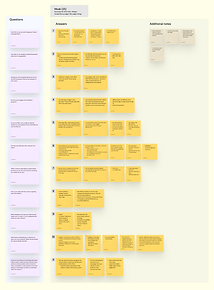
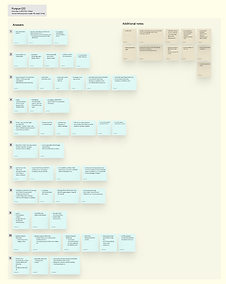
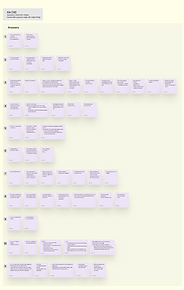
Interview Questions
1.
How often do you use online shopping or fashion retail application?
2.
How often do you actually purchase the products online from the application?
3.
During your online shopping experience, how do you find the products that you are looking for?
4.
Are there any struggles when finding the products?
5.
Do you use ‘filter’ menu to help you find the products you are looking for? If yes, what filters do you normally use?
6.
Are there any difficulties when using the filter menu?
7.
When it comes to selecting the product before purchase, do you have any concerns in choosing the suitable size for you?
8.
How do you tackle with the concerns regarding size of the clothes?
9.
When shopping online, how much does the size impact you in a scale of 1 to 5 in making decision before purchase, and why?
10.
What fashion retail platforms you often use to buy products? Which one do you find the most preferable and why?
11.
If there are any features or technology that would help you search, select and make decision to buy products more accurately in terms of size and more conveniently in a short time, what features or technology you think it is essential to help? Let’s discuss.
Interview Answers (5 participants from the hypothesised target group)


Define.
This stage focuses on categorising user personas and defining a problem statement based on prioritised concerns from user interviews. I have used empathy maps to identify both similar and different behaviour of users regarding their fashion online shopping experience to come up with a target group which can be separated to 2 personas: 1) MJ (a contemporary fashionaholic) and 2) Nana (a rational shopper).
For better problem identification, I have created a digital user journey mapping of MJ and Nana to demonstrate realistic feelings and pain points during their online shopping experience, which contributes to the final problem statement that helps ideate hypothesis and solutions for product development.
Empathy Map
Persona #1 - Contemporary Fashionaholic
Attributes: confident, easily influenced, young, price-centric

Persona #2 - Rational Shopper
Attributes: busy, mature, considerate, value-centric

User Personas
Persona #1 - MJ

Persona #2 - Nana
.png)
User Journey Mapping
Goals
Effortlessly find, select, and buy desirable products with accurate size in a short period of time from online shopping experience that feels similar to offline experience

Problem Statement

Users encounter the difficulty of searching, filtering, and selecting the products they look for during their online shopping experience, also, feel indecisive and unconfident to follow the size guide measurement of the products online which prevent them from purchasing products.
Ideate.
This ideation process covers hypothesis and solutions for user concerns regarding the problem statement above. I have also created a digital user flow to demonstrate how the research personas would go through when using the products. The wireframe and hi-fi screens which were ideated from the proposed solutions can be found in the Design section below.
Hypothesis & Solutions

Digital User Flows

Design.
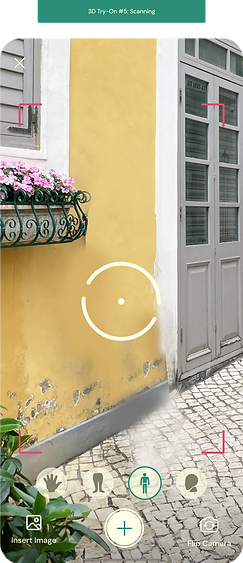
This section includes a style guide (colour styles, typography, and icons) to indicate the direction of the application design which afterwards reflects on the high fidelity screens of RISE Apparel. The screens and flows at the end of the section represent a customer shopping experience from using features such as a search bar, category menus, sort and filter menus, size charts, 360° body measurement, and 3D try-on that are expected to lead users to achieve goals in the most convenient, comfortable, and time-saving way. You can find the prototype link of the application under the High Fidelity Screens section.
Wireframing

Style Guide
Colour Styles
Primary Colour

Secondary Colour

Typography
DM Sans
Display text
20px
Display text
Header 1
18px
16px
Description 1
14px
Description 2
12px
Icons
Dazzle UI (https://dazzleui.pro)

Flaticon (https://www.flaticon.com)

High Fidelity Screens




Prototype Link:
Expected goals from using prototype:
Get to the product details page and find the right size of the products by using 3D Try-On
Features in this prototype:
1) Collection articles page
2) Personalised Quick Menus & Categories
3) Sorts & Filters
4) Product Barcode Scan
5) Size Guide & Size Input
6) 360° Body Measurement & 3D Try-On
User Flows

Test.
This section covers user feedback after the testing of happy-flow prototype of RISE Apparel application. The participants involved in the testing both came from a target group selected for user interviews during the discovery and other new users from a target group who were introduced to the application. The feedback will be implemented to both content and design which will be developed further in the future.
Gain
Pain
-
Users can realise this application contains the concept of ‘sustainability’ from the colour system
-
Users find it easy and quick to find products directly from barcode scanning feature in the menu bar
-
Users think that the search and category system is organised and sorted effectively.
-
Users are preferable when seeing the review ratings at the top of the product details to ensure reliability of the products
-
Users think that the size chart and size guide are detailed and easy to follow
-
Users think that the 3D body measurement really helps in measuring parts that they are unfamiliar with the size for day-to-day shopping (arms, sleeves, thighs, etc.)
-
Users like the product type feature that helps them in choosing either fitter or looser products to wear
-
User finds the product details page include lots of information
-
Frequent shopper users prefer more specific clothing types of filters (High-waist, Wide-leg, etc.)
-
Users expect to see the whole shopping experience in the prototype
-
Users find the promoted pictures of the products are difficult to see/skim on the feed (clothes-on-model pictures make it dizzy)
-
Users prefer to have a review section on the top order of the expandable menu section in the product detail page
-
The ‘Shop by Occasions’ feature is good but might not be able to fit for all users as sometimes it can stereotype the fashion