TAGTHAi Digital Transformation Project:
Building Samut Songkhram Back to Life
Explored collaboration opportunities to revitalise Samut Songkhram through tourism while enhancing community well-being and economic growth.
%203.png)
%202.png)
Project Overview
To explore and assess the potential for TAGTHAi's collaboration with Samut Songkhram, aiming to find opportunities to bring the city back to life through tourism while also keep in mind, enhancing community quality of life & boost revenue are vital part of success.
Product
Social Enterprise: Building Samut Songkhram Back to Life
Role
Strategy & Product Manager
Researcher
Duration
4 months (Implementation)
Responsibility
-
Developed the social enterprise business model research with Samut Songkhram implementation, collaborating with the Samut Songkhram authorities, Tourism Authority of Thailand (TAT), and other community accelerators to find the uniqueness of Samut Songkhram
-
Research, and interviewed Samut Songkhram community members first-hand to gather organic insights to further define pain points of Samut Songkhram in terms of tourism, community, and economic development.
-
Analysed the opportunities from findings which develop to business model both for strategy and implementation (Samut Songkhram Pass)
-
Proposed business models & collaborated with C-level executives, stakeholders, & specialists to find optimal solutions for launching a social enterprise project
Development
-
Developed in-dept understanding of social enterprise business model, prominent business frameworks in building a sustainable business
-
Understood the process of finding and develop value proposition of TAGTHAi, and translate the findings to business initiatives to reach business goals
Overview.
A Glimpse of Samut Songkhram
The on-field research captured the diverse activities of the community, highlighting the daily interactions that shape Samut Songkhram's authentic charm and its connection to visitors.


Why did we choose Samut Songkhram?
Selection Process
From the Social Enterprise Phase 1: Building a Social Enterprise Business Model, we have contacted several community accelerators and community leaders to understand and analyse whether which communities suit the readiness criteria that can further develop to a community-based tourism and implement business models that collaborate with TAGTHAi.
Among the other Thai provinces, Samut Songkhram is the most prominent, outstanding community that meets the criteria and has the possibility to grow.
Throwback Thursday
Previously, one of the Samut Songkhram's sub-districts, notably named 'Amphawa', was one of the most popular attractions both for domestic and international travellers. The city was full of history, local uniqueness, activities, and products including floating market, water sports, homestay, historical attractions rooted from Ayutthaya period, and many more.

After years passed by, the number of travellers has been relatively decreasing. The city becomes more quiet, the historical attractions become less recognised, the economic activities become less active, the products or activities become less unique, and the sustainable ecosystem becomes less preserved. From this, we have decided to identify pain points that community members are encountering, and find the actionable solutions to bring back Samut Songkhram that is full of vibrance, sustainable economic cycle, and meaningful tourist experience.
Research Timeline & Methodology.
Timeline & Key Details

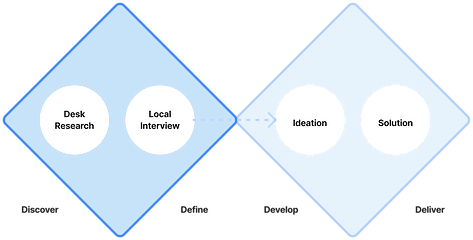
Research Methodology
Desk Research
Conducting field research in Samut Songkhram to gather insights and data, helping us better understand the local situation and environment.
Local Interviews
To gather insights into a person's experiences, opinions, and behaviors through one-on-one conversations, uncovering attitudes and motivations not captured by surveys.
Understanding Personas & Trends.
Before conducting data analysis, it is essential to develop a deep understanding of tourist personas and emerging travel trends to ensure that the travel app’s social enterprise model aligns with market needs and community impact.
By mapping tourist personas and trends, the travel app can refine its value proposition, service offerings, and partnership strategies, ensuring that it effectively balances business sustainability with meaningful social impact.
Tourist Personas
Focusing on Thai tourists as there are existing gaps including language barriers and to increase revenue stream based on Thailand's low season .

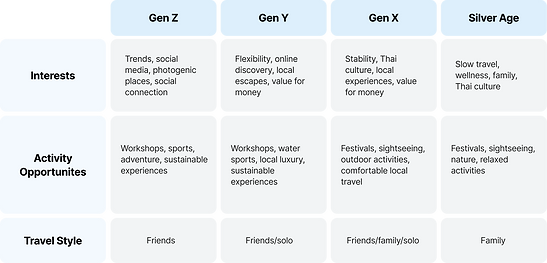
Overview of Tourist Trends
Trends reflecting Thai and foreign tourist behavior and needs, aligned with Samut Songkhram’s places and experiences.


Mapping Tourist Trends Based on Samut Songkhram's Destinations
Reference from TBWA & desk research
5 Influential Trends in Thai Tourism

Short & easy-to-recharge trips
Gen X
Gen Y

Peaceful & city-escape trips
Gen X
Gen Y
Gen Z

Prioritise the journey over the destination
Gen X
Gen Y
Silver Age

Wellness with social media sharing
Gen X
Gen Y
Gen Z

Comfort and desire for nature travel
Gen X
Gen Y
Silver Age
5 Influential Trends in Foreign Tourism

Local & hidden gems finding trips
Gen X
Gen Y
Gen Z

Sustainable and aesthetic travels
Gen X
Gen Y
Gen Z
Silver Age

Food more than flavour
Gen X
Gen Y
Gen Z
Prioritise the journey over the destination
Gen X
Gen Y
Silver Age
Gather Insights.
In this part, we did an on-field research at Samut Songkhram, interviewing the community leaders, community members, tour guides, and business owners in order to define and understand pain points of Samut Songkhram as a tourist attraction perspectives.
We gathered raw data, and made an analysis and summary to group patterns of answers, and came up with key opportunities that have the possibility to develop as business models with a collaboration with TAGTHAi.
On-Field Research Objectives
-
Explore & assess the community potential in developing TAGTHAi x Samut Songkhram SE model, aiming to find opportunities to bring the city back to life through tourism
-
Enhance social impact & economy of scale of Samut Songkhram, while preserving cultural heritage that areunique to target travellers

On-Field Interview Template
Question objectives (participants: community members & tourists):
1) Sell Theme for Samut Sonngkram
2) Sell Who (target audience that match with existing) |
3) How will TAGTHAi be able to help community and merchant?
There are 2 sets of questions: 1) for tourists & 2) for community members. The interview questions for tourists are based on tourist experience and their perceptions towards Samut Songkhram, while the questions for community members will be categorised by types of attractions: temples/churches merchants, agricultural attractions, historical attractions, cafes/restaurants, and facilities and transportation.


Raw Data Mapping & Analysis


Finding Opportunities.
After raw data mapping, we have grouped patterns of answers and identified key pain points of Samut Songkhram, and key opportunities of how TAGTHAi create a collaboration between itself and the community based on TAGTHAi's Value Proposition. Here is the report summary that proposes the business models that include both B2B and B2C perspectives, along with Samut Songkhram travel route recommendations based on the target personas.
Customer Journey Opportunity Map - How TAGTHAi Can Support Tourists
5 moments reveal where TAGTHAi can win

Strategic Focus: Connect inspiration, planning, booking, and in-trip support in 1 trusted local travel ecosystem
Local Capability Strategy - 4 capabilities can turn local heritage into global discovery
Based on insights from our field research in Samut Songkhram, these are the key areas we aim to improve to revive and uncover the hidden gems.

Themes & Characteristics

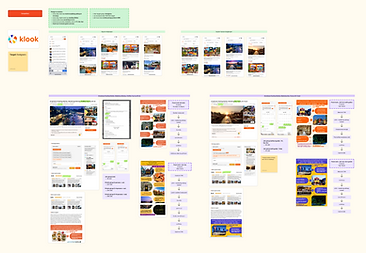
Competitor Research
Key insights from competitor research:
-
Most platforms provide routes that include only major highlights of Samut Songkhram, for example, Train Market, Amphawa Floating Market, or Dam Noen Sa Duak Floating Market, aiming to target foreign travellers who are first-time Thailand visitors.
-
They have join tour group with private group transportation


Working on Business Models.
B2C: Travel Pass & Ticket Strategy
Travel Pass
-
Include Samut Songkhram highlights (must-have & additional)
-
Each attraction needs to be far away from each other
-
Attractions/activities need to be time-consuming (duration)
-
Value of money & increase profits
Tickets
-
Provide flexibility & less commitment
-
Cost
-
Trip Planning
-
-
Offer specific needs of traveller (specific activities that are not included in Pass)
-
Activities need to be unique & have specific characteristics to attract travellers
-
Customers can travel regardless of how far each location is


Final Approach
Pass Products:
✅ Attraction and Highlight places
✅ Group activities, or activities that different age groups can enjoy in the same Pass
✅ Each benefit price is more approachable than those in e-tickets (from TAGTHAi side)
✅ Each place has to be time-spending, and requires time to travel.
Ticket Products:
✅ Unique activities/places that have specific characteristics to attract travellers (differentiated from Pass benefits)
✅ Answer the needs of specific user personas
✅ TAGTHAi display price is less than the merchant original price
B2B: Developing B2B Strategy
CSR Programs, Team Bonding Trips, & Selling Community Goods
-
Develop B2B CSR Programs that enable corporate clients to participate in meaningful volunteer initiatives, creating measurable social impact while aligning with their ESG commitments.
-
Promote Community Products by connecting corporate partners with locally made goods, increasing market visibility and generating sustainable economic opportunities for community entrepreneurs.
Developing Pricing Strategy
The four route structures and price scenarios are listed below. One important pricing issue emerged: the THB 1,450 price supports a 15% markup only when fulfilment cost stays near THB 1,260; applying the proposed 5% discount without lowering that cost materially reduces the contribution.

4 routes serve distinct needs, but not the same cost base.
Prices below are source-board fulfilment estimates by group size; transport time is excluded.

Takeaway: Standard routes reach the THB 1,260 ceiling at 2+ travellers; Adventure needs a premium or fewer inclusions.
6 redemptions make THB 990 Pass viable
Lower the entry price while controlling fulfilment exposure through a clear usage limit.

Be a part of TAGTHAi: Samut Songkhram Pass
Tailored for Samut Songkhram's business owners and local merchants.


Developing.
The Social Enterprise team have gathered TAGTHAi foreign traveller insights & Thai traveller insights from TAT (Tourism Authority of Thailand) to study what activities, trends, & behaviour that will be suitable for the Samut Songkhram model. Here, we tried to map the data of traveller behaviour to our hypothesis of themes & characteristics of Samut Songkhram to solidify the Samut Songkhram Pass & E-ticket strategy, possibility and feasibility of the model.
B2B Models
Samut Songkhram CSR Pack

B2C Models
Samut Songkhram Pass & Tickets

Marketing Communication

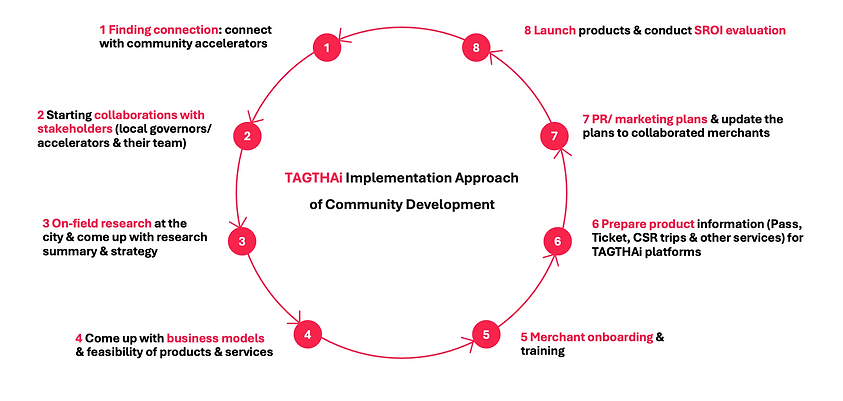
Implementation Stages
Here is the implementation stages that TAGTHAi did with SE Samut Songkhram, which we believe it would work for the future SE community also.
Performance Report
A performance report presenting insights for the TAGTHAi SE Samut Songkhram highlighting usage metrics, user behaviour, and the economic impact generated for the local community.

Lesson Learned.
After the project has been done, I have conducted a lesson learned analysis report to see what needs to keep going and opportunities that the team can improve in the future for Social Enterprise projects.
Why are we doing this?
-
Extract key lessons from the Samut Songkhram Social Enterprise model
-
Identify core pain points, what went well, and limitations of the current SE frameworks
-
To analyse whether the existing starter model is suitable for future SE communities (both B2B & B2C) & find opportunities to close the gaps and enhance the model’s effectiveness.
-
Serve as a bible and guidebook for the SE journey, covering process and methodologies for future improvement.


